

Bees bring benefits to University farm
Last updated on 11 August 2026
Bees on the University’s farm near Tadcaster have improved biodiversity and are producing honey
Bees on the University’s farm near Tadcaster have improved biodiversity and are producing honey – which is now for sale!
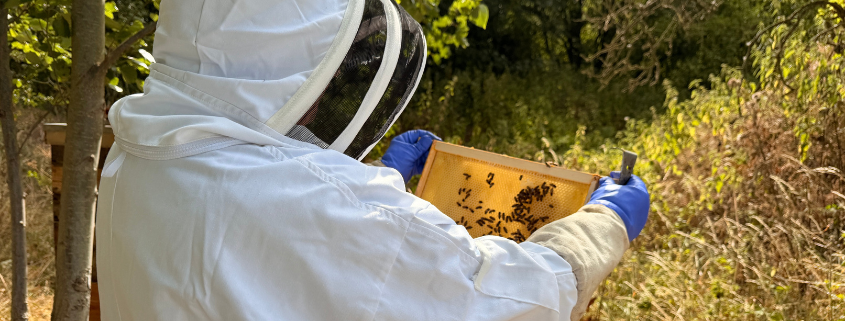
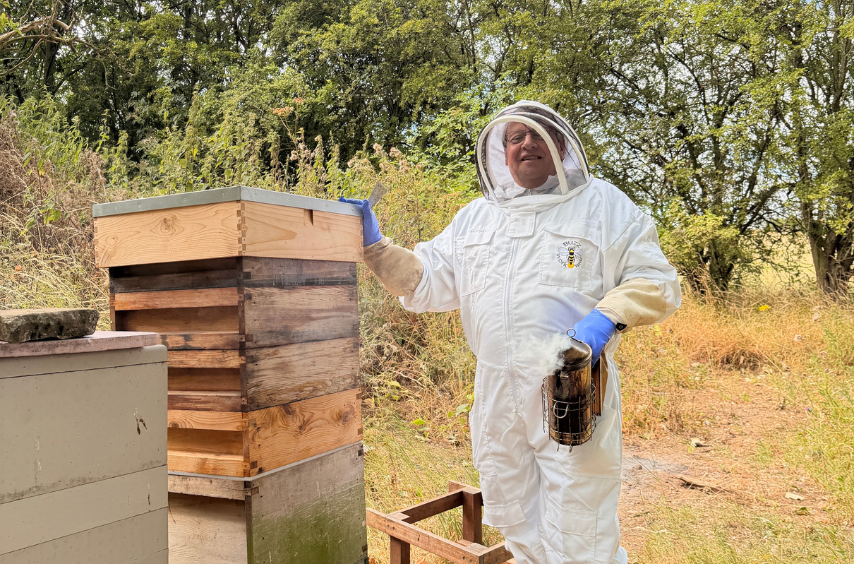
Hives on land rented out to beekeeper Neil Crossley – previously employed in the Faculty of Biological Sciences – help to pollinate oil seed rape and other crops, including peas and other flowering plants.
Jarrod Benson explains that bees provide far more than honey on a farm.
“By pollinating crops, they help improve seed set, crop quality and, in some cases, increase yields.”
“Bees also support wider farm biodiversity by pollinating wildflowers, which in turn provide food and habitat for other insects, birds and wildlife. Healthy bee populations therefore contribute to a more resilient and productive farming ecosystem.”
Phil Dougill, Head of Asset Management, said:
“Sustainable practice is at the heart of the farm’s work. It is a hub for climate-smart research and was recently announced as a McCain Farm of the Future. This collaboration focuses on reducing the environmental impact of farming and increasing food security.
“With the National Pig Centre also based on the farm, we are always seeking new ways to improve biodiversity and investigate circular farming. The fact that we can offer the honey to staff is an added benefit.”
Neil Crossley said:
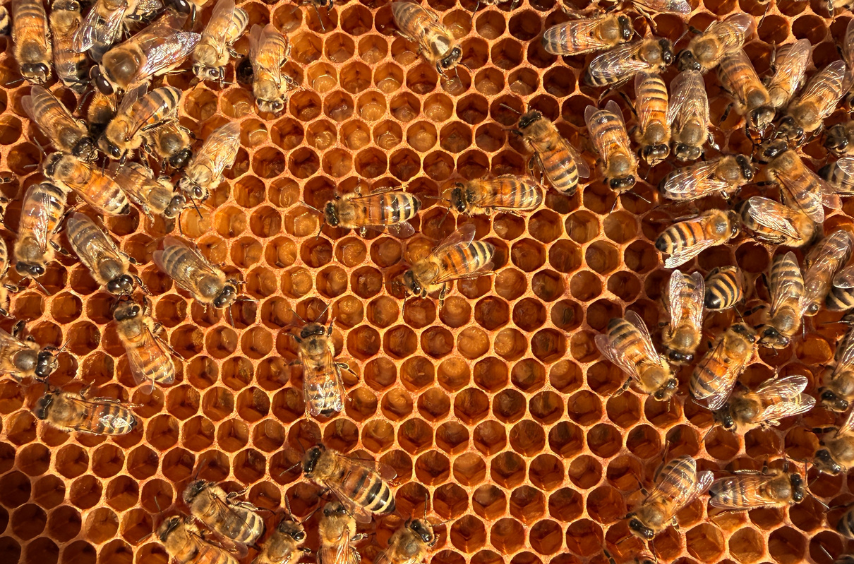
“Beekeeping is a fascinating hobby. I’m so grateful to the University for hosting the hives. The amount of honey produced is weather and nectar flow dependant and we hope to produce 500 – 700 jars per year.
“Although locally produced honey is a premium product, at £7.50 a jar this mostly covers costs.
“I’ve had so much feedback from people who’ve tried the honey saying it’s the nicest honey they’ve ever tasted, unlike cheaper products which tend to be blended and bland in taste, ours is pure and full of flavour.”
How to buy your honey
There are two types available – golden, runny wildflower honey and a light-coloured soft set oilseed rape honey.
To place your order, head to the Facilities Directorate Building Reception where you will be asked to scan a QR code and make a purchase online. You will need a little time to create an account while there, but the quality of the product should be worth the effort and you can collect it there and then!


