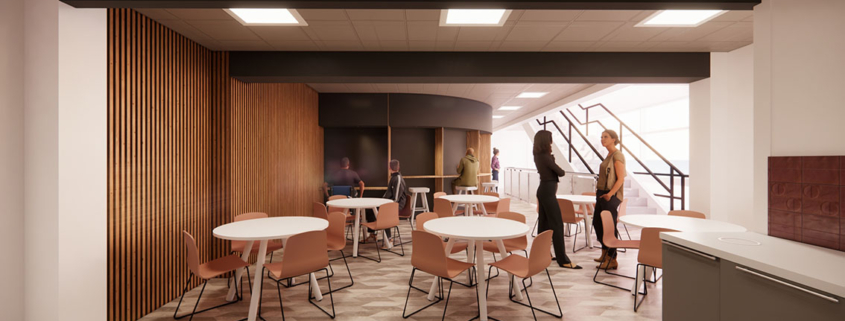
Campus improvements – creating spaces to thrive
Work is progressing at pace across campus as we continue to create more welcoming, accessible and modern areas for students and colleagues.
Read more


Work is progressing at pace across campus as we continue to create more welcoming, accessible and modern areas for students and colleagues.
Read more
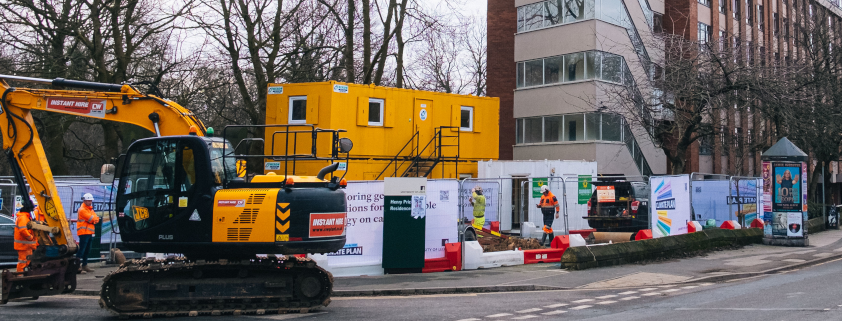
After over five months of work on eight boreholes across campus, scheduled drilling on the University’s landmark geothermal energy project has been completed.
The work, co-led by Estates and the Sustainability Service, is testing the potential to use underground heat to contribute to our heating systems.
Specialists in the Estates team have been working alongside contractors from ANTS Group and engineering firm Buro Happold to complete borehole drilling to depths of 150m to 250m.
Researchers from the University’s Geosolutions Leeds centre are now analysing the data collected and will reveal their findings later this summer.
Early testing of open and closed-loop boreholes has shown positive indications of the potential to develop a geothermal heat pump system on campus.
If successful, it could provide an approach which can be used across the region and the rest of the UK.
Drilling work began in February at locations around campus, including the Henry Price hall of residence, and the Maurice Keyworth and Mechanical Engineering buildings.
The work forms part of the Net Zero Delivery Plan, which sets out the key projects that will help achieve the University’s target of reaching net zero greenhouse gas emissions by 2030.
David Oldroyd, Deputy Director of Development at the University of Leeds, said: “Colleagues in Estates have worked alongside specialist contractors to keep disruption to a minimum and allow experts from Geosolutions Leeds speedy access to the data they need to determine the project’s success.
“This work has the potential to provide a more sustainable way of heating campus in line with the University’s Net Zero goals and set an example for future energy innovation.”
The sites where work is taking place will be restored to normal use by mid-summer.
Find out more by visiting our project page and the Sustainability Service website.
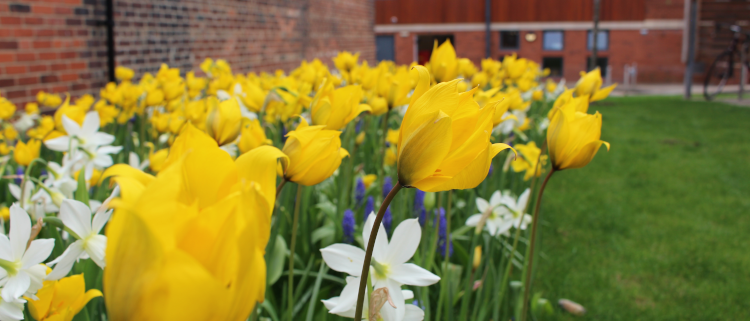
Every year, the Grounds & Gardens team work tirelessly to make sure that campus looks beautiful in bloom.
And as preparations begin for next spring, the team are giving staff and students the power to choose their favourite bulbs to be planted as part of next year’s display.
Staff and students can vote on four bulb mixtures, with the winner being planted on the former rugby pitch at Western Campus.
The University’s gardeners work closely with Dutch specialists JUB Holland to plant over 14,000 bulbs across campus every year.
The team log over 700 combined hours every week during winter to make sure that campus is ready for spring.
James Wright, Senior Maintenance Manager (Managed Services) at the University of Leeds said: “A lot of hard work goes into making sure that campus is an amazing space to be in, and a big part of that is listening to those who use campus.
“This is a unique opportunity for staff and students to support in what is an essential part of our work.”
Voting closes on Friday 12 July.
Check out our gallery of spring 2024 and read more about the Grounds & Gardens team’s work.

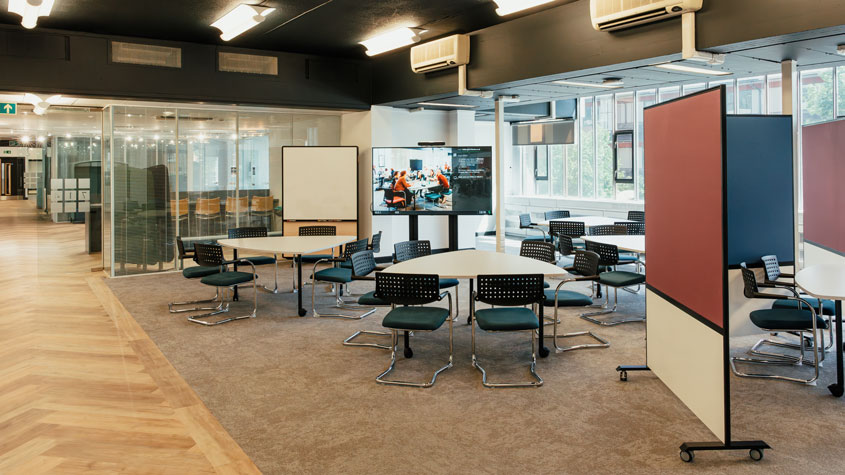
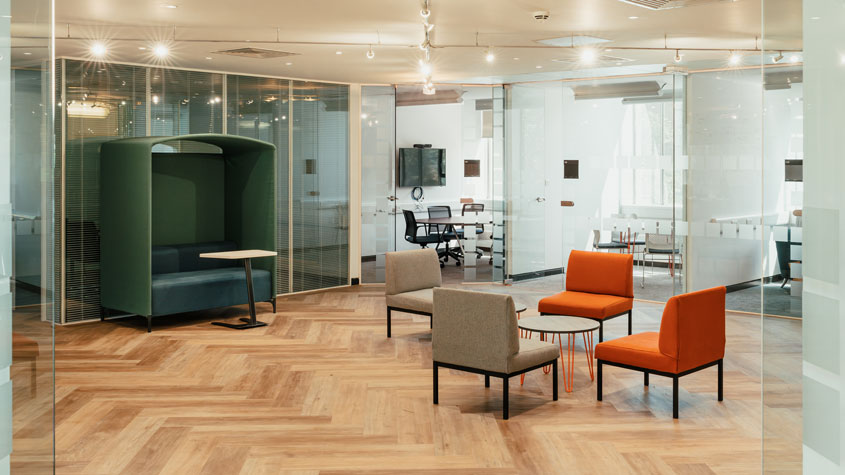
A new study space and meeting place for University of Leeds postgraduate research students has opened above the Refectory.
The new area, which will be staffed by teams from Leeds University Union, provides a mixture of quiet and communal spaces to suit students working independently and collaboratively and building communities.
The Estates team worked closely with Leeds University Union to make sure that the space met the needs of students.
Project Manager Alicia Graham said:
“This project has delivered on the brief that was set by Leeds University Union to create a space that was both welcoming and versatile for postgraduate students.
“Colleagues from Estates have had regular meetings with members of LUU to ensure that the space was suitable and appropriate for our postgraduate research students.”
It has been redecorated and reconfigured by the Estates team’s interior designers, providing a brighter and more versatile area for students.
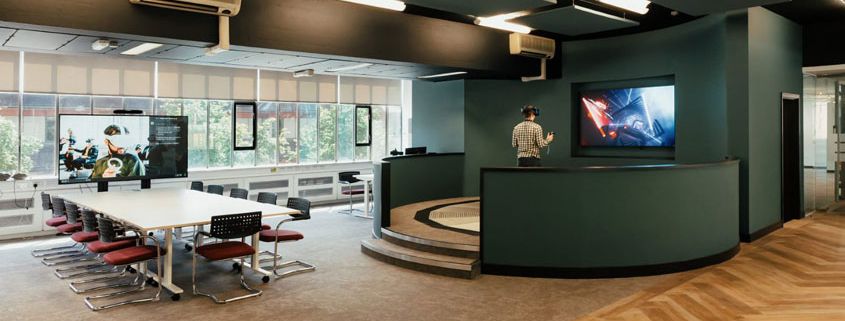
HELIX – a brand new innovative technologies hub to support student education – has been completed.
Working with fit-out specialists Overbury and the University’s Digital Education Service (DES), the Estates team managed the complex build and refurbishment of the space on Level seven of the Grade II-listed E.C Stoner building.
The space includes state-of-the-art equipment such as the only Omnideck in the UK (pictured) and users will have access to immersive technology, prototyping equipment and multimedia studios.
David Oldroyd, Interim Deputy Director of Development, University of Leeds, who oversaw the project said:
“I’m very pleased with the high quality finish of the space. The team have delivered a good quality space in a challenging building within a short space of time.”
Ann Allen, Director of Campus Innovation & Development said:
“HELIX encourages community and collaboration and is key to the University’s Digital Education Strategy. I look forward to seeing students and staff using it.”
Over the next few months, the HELIX team will encourage staff to visit the space ahead of the official opening in September 2023. Tours of HELIX will be advertised in due course.
To find out more about the project, please visit the DES webpage.
To get more updates from Estates and Facilities, visit our news section here and follow Campus Reimagined on Instagram.

Senior Maintenance Manager, James Wright, has outlined the critical role of maintenance and operations staff in achieving the goals of the University of Leeds’ Climate Plan.
In a video encouraging staff to play their part, James discusses partnership with academic colleagues on Gair Wood – new planting across 37 hectares that will increase biodiversity and act as a Living Lab.
James also discusses other initiatives such as the University’s fleet moving to zero emissions.
James Wright, Senior Maintenance Manager, said:
“The University of Leeds estate is around the size of 500 football pitches and is incredibly diverse – from offices and residential buildings to sports grounds and farmland.
“We have a big part to play in helping the University to meet its goal of reaching net zero carbon emissions by 2030. We try and lead by example to make sure that we achieve net zero.”
At £174 million, the University of Leeds’ ambitious Climate Plan represents the largest investment it has ever made.
Seven key principles highlight the university’s commitment to net zero emissions, a sustainable curriculum, responsible investment and reorienting postgraduate research and teaching away from the fossil fuel sector.
To find out more about the University of Leeds’ commitments, visit the online hub here. Follow @UoLCampusDevelopment on social media for further updates.
Watch a video of James explaining the role the Estates and Operation

Over 700 delegates at the Digital Universities UK Conference this week will have the opportunity to preview a cutting-edge new space on campus for digital innovation – HELIX.
The new space, developed by the Facilities Directorate (FD) on behalf of the Digital Education Service (DES) and others across the University, and built by construction company Overbury, will be one of the stops on tour of digital expertise on campus.
Ann Allen, Director of Campus Innovation and Development said:
“The FD supports the University by creating amazing spaces and experiences on campus that enable students and staff to achieve their potential.
With state-of-the-art equipment such as the only Omnideck in the UK, HELIX will facilitate the development, testing and delivery of digital learning assets to support student education. It further cements the position of the University at the forefront of digital provision.
“Users will have access to immersive technology, prototyping equipment, and multimedia production studios. It will encourage community: a core value for the University and the FD – and is a major step in the University’s digital transformation strategy.”
HELIX is in the final stages of its build and will be open for general use in May.
The Times Higher Education Digital Universities UK Conference is being hosted by the University of Leeds from 17-20 April.
“HELIX is a brilliant example of a collaborative space that will bring together a whole host of people – students, cross-faculty academics and external stakeholders – to create and learn.”
To find out more about the project, please visit the DES webpage. To get more updates from Estates and Facilities, visit our news section here.
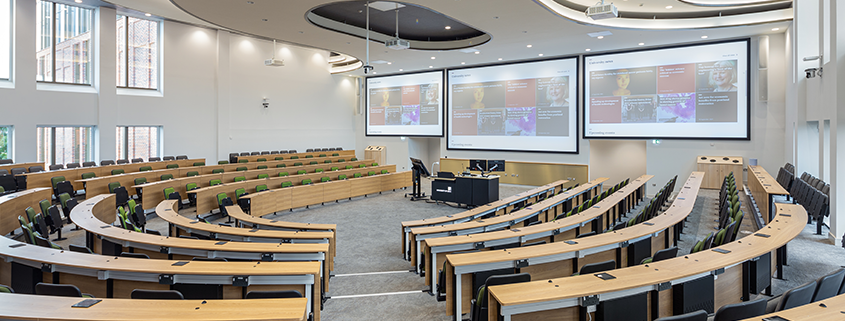
Michael Hern, Teaching Space Support Team Leader explores the teaching spaces at the University of Leeds using the feedback from students and academic to reshape learning spaces into modernised environments.
Exciting new teaching spaces across campus have been shaped by feedback from students and staff says Michael Hern.
Over 15 years Michael has seen our 400 teaching spaces transform from ‘chalk and talk’ to innovations such as microphone-enabled tracking cameras used during teaching sessions in the Esther Simpson Building, as he explains in the following video:
Michael Hern, Teaching Space Support Team Leader said:
“Using technology and great design is important for many reasons. For one, it means that academics don’t have to turn their backs on students while they teach to write on a board.”
 Research shows that this kind of innovation enhances the student learning experience.
Also in Roger Stevens, spaces were designed with walkways so that teaching staff can interact with students rather than ‘delivering’ material from the front.
Digital transformation is at the heart of the University’s strategy and the Estates and Facilities team in the University’s Facilities Directorate deliver projects across campus with this at their heart.
“Stemming away from the traditional practices has enabled positive change. The latest ideas and feedback have contributed to creating a community and bringing people together.”
This is certainly true of the new lecture theatres at Roger Stevens where small details make a big difference. Students said they wanted more space to store bags and coats and that wellbeing was important. This has resulted in imaginative storage facilities and a green wall.
“The work is challenging but very rewarding. I’m very proud.”
Find out more about teaching spaces by following @UoLCampusDevelopment

Find out how Margarita balances the needs of our diverse university community by creating amazing places and spaces for all.
I am an interiors architect and workplace strategist with the Facilities Directorate.
It’s my job to create environments that best serve the needs of its users. I’m developing a broad strategy to embrace current global trends for workplaces. The past few years have significantly impacted what we need from a physical workplace.
They vary in scale but are all focused on using space in a more sustainable way in every sense: carbon targets, mental health, financial implications, long-term growth projections, etc.
Working with external consultants I’m developing a design concept for the Digital Learning Accelerator in E.C Stoner, a new build to help the University further develop as digital innovators.
I hope our ideas will balance out the requirements of multiple types of end users, different age groups and the newest technology. My role is to soften the industrial fabric of the layout and help specify the finishes that will inspire and improve the performance of both the staff and students.
I can use my versatile experience to create environments that will serve students, help staff and as a result support the University’s Strategic Plan. I work with fantastic team leaders – David Oldroyd and Ed Batty – whose open minds and positive vision ensure that we are embracing the future.
I heard someone say “God is in the detail, so is the devil”. And I live and work by it. A glass table top can cause harm because of its low visibility, or a metal arm rest can make the chair uncomfortable. Poor choices can result in time and money wasted, and more stress added to the workload, especially on large scale projects.
We all need to work together and create a feeling of community, because supportive environments can lift up any mood and reduce anxiety. We have to share our spaces and use solutions that allow us to collaborate more and isolate less, and include people with all sorts of different needs.
I am fortunate to have my passion as my career, and have the luxury of working on projects that I enjoy, so it’s difficult to give one example. I’ve recently started planning design strategies for various spaces in the libraries with Facilities & Space Manager Stephen Day, which is exciting.
Collaboration with people who share the vision of progress is always rewarding and we both understand that investment works better in the long term than spending!
Find out more about Margarita’s upcoming projects by following @UoLCampusDevelopment

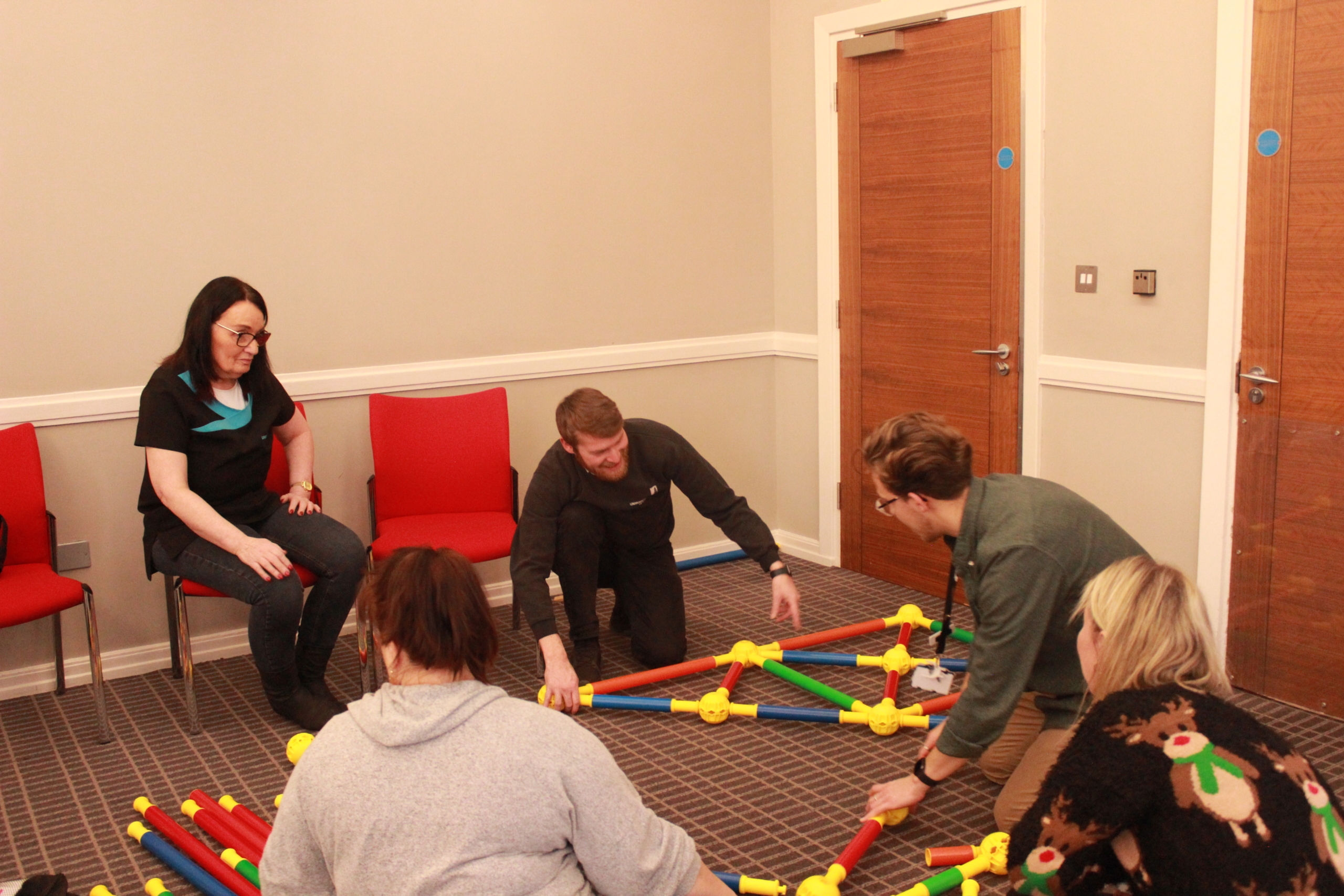
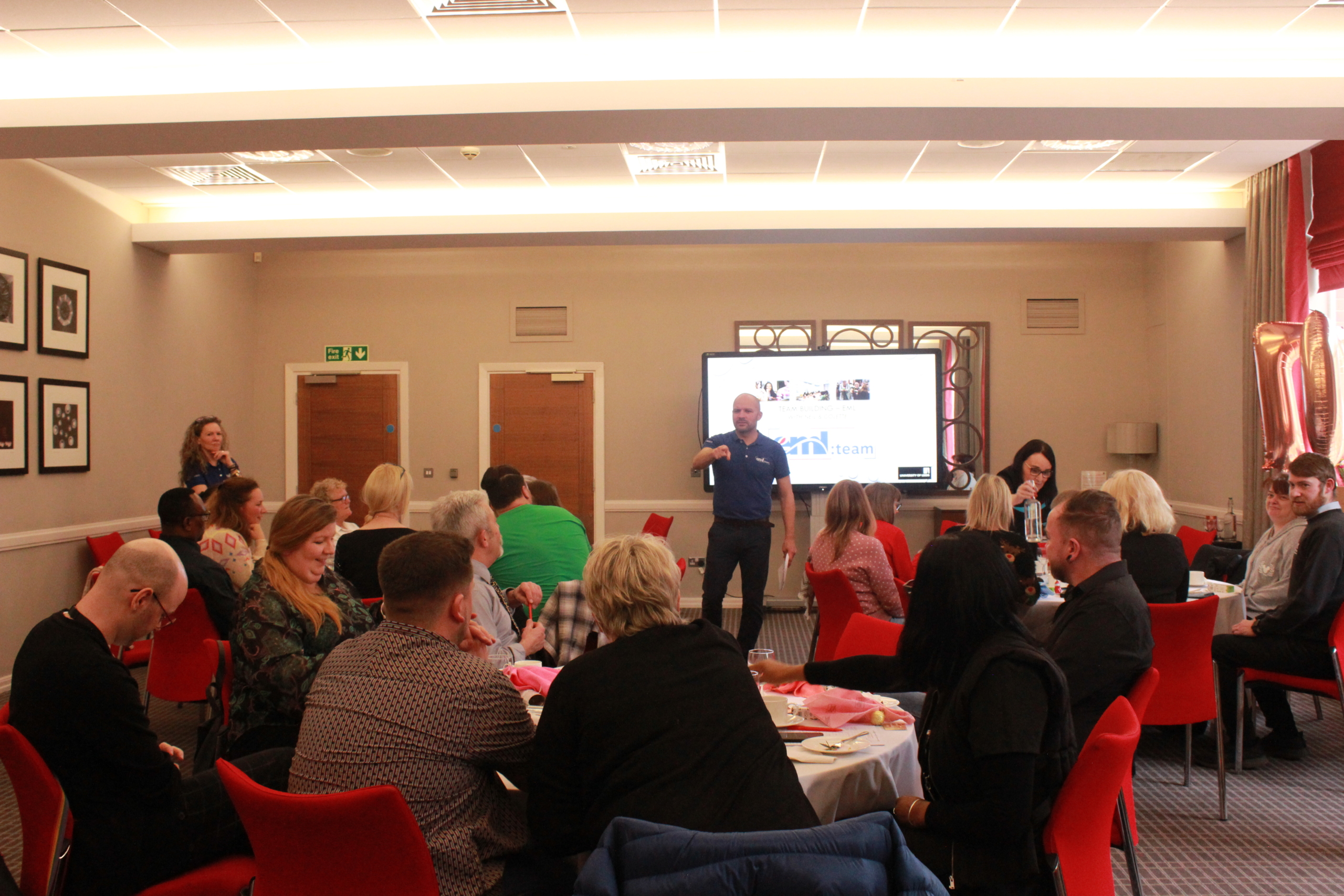
Team leaders from Cleaning Services took part in a development day on Tuesday, working with colleagues across the University.
The theme for the day was working together as one team and how collaboration brings positive impact for all involved.
Jill Roberts, Head of Cleaning Services said:
“It’s so important to invest in personal and professional development, and while it is always difficult to find the time, it was obvious how much everyone got from the day.”
“Collaboration is a University Value and reflects the direction of the Facilities Directorate as a whole, which we are proud to be a part of.”
“Thank you to colleagues from the Staff Counselling Service, Health & Wellbeing, Security and OD&PL who joined us.”
The Cleaning team are integral to the running of the University and Jill has recently received a large number of appreciative emails from across campus. These included:
“I just had to write this morning to let you know how blown away we are with the cleaners here in Maths, who always go above and beyond what is expected. They are extremely friendly and continuously do an amazing job!”
And from Psychology:
“They were professional, cheerful and did a fantastic job! We are really grateful to them all and they definitely made a difference.”
Estates and Facilities
Facilities Directorate Building
University of Leeds
Leeds, LS2 9JT


